Anguilla
  Antigua and Barbuda
  Grenada
  Bahamas
  Barbados
  Belize
  Dominica
  Guyana
  Haiti
Haiti  Jamaica
  Montserrat
  St. Kitts and Nevis
  St. Lucia
  St. Vincent and the Grenadines
  Suriname
  Trinidad and Tobago
  Turks and Caicos

Outlook and Key Considerations for Sustainable Commercial Aquaculture Development in CARICOM
Samia Sarkis, Yvette DieiOuadi, and Eric Wade
SubRegional Office of Latin America and the Caribbean, Barbados
Email: This email address is being protected from spambots. You need JavaScript enabled to view it. , This email address is being protected from spambots. You need JavaScript enabled to view it.
ABSTRACT
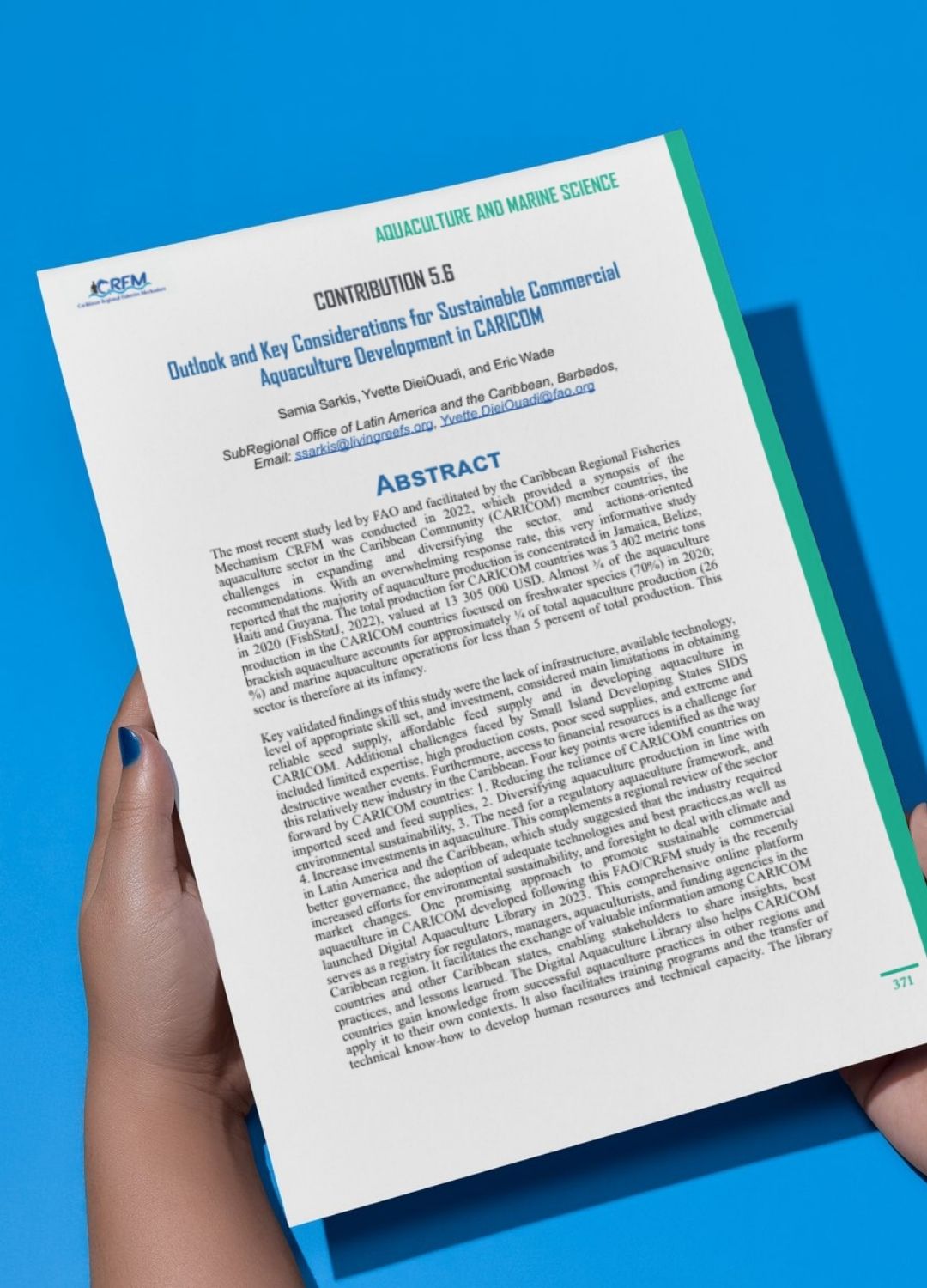 The most recent study led by FAO and facilitated by the Caribbean Regional Fisheries Mechanism CRFM was conducted in 2022, which provided a synopsis of the aquaculture sector in the Caribbean Community (CARICOM) member countries, the challenges in expanding and diversifying the sector, and actions-oriented recommendations. With an overwhelming response rate, this very informative study reported that the majority of aquaculture production is concentrated in Jamaica, Belize, Haiti and Guyana. The total production for CARICOM countries was 3 402 metric tons in 2020 (FishStatJ, 2022), valued at 13 305 000 USD. Almost ¾ of the aquaculture production in the CARICOM countries focused on freshwater species (70%) in 2020; brackish aquaculture accounts for approximately ¼ of total aquaculture production (26 %) and marine aquaculture operations for less than 5 percent of total production. This sector is therefore at its infancy. Key validated findings of this study were the lack of infrastructure, available technology, level of appropriate skill set, and investment, considered main limitations in obtaining reliable seed supply, affordable feed supply and in developing aquaculture in CARICOM. Additional challenges faced by Small Island Developing States SIDS included limited expertise, high production costs, poor seed supplies, and extreme and destructive weather events. Furthermore, access to financial resources is a challenge for this relatively new industry in the Caribbean. Four key points were identified as the way forward by CARICOM countries: 1. Reducing the reliance of CARICOM countries on imported seed and feed supplies, 2. Diversifying aquaculture production in line with environmental sustainability, 3. The need for a regulatory aquaculture framework, and 4. Increase investments in aquaculture. This complements a regional review of the sector in Latin America and the Caribbean, which study suggested that the industry required better governance, the adoption of adequate technologies and best practices,as well as increased efforts for environmental sustainability, and foresight to deal with climate and market changes. One promising approach to promote sustainable commercial aquaculture in CARICOM developed following this FAO/CRFM study is the recently launched Digital Aquaculture Library in 2023. This comprehensive online platform serves as a registry for regulators, managers, aquaculturists, and funding agencies in the Caribbean region. It facilitates the exchange of valuable information among CARICOM countries and other Caribbean states, enabling stakeholders to share insights, best practices, and lessons learned. The Digital Aquaculture Library also helps CARICOM countries gain knowledge from successful aquaculture practices in other regions and apply it to their own contexts. It also facilitates training programs and the transfer of technical know-how to develop human resources and technical capacity. The library provides access to educational materials, workshops, and expert guidance, empowering aquaculturists to enhance their skills and contribute to sustainable development. Additionally, it connects funding agencies with aquaculture projects, attracting investments and promoting collaboration between the private and public sectors. The platform encourages regional collaboration and resource pooling to build necessary infrastructure, such as shared facilities, research centres, and technology transfer hubs. Overall, the Digital Aquaculture Library represents an essential tool for CARICOM member states to overcome challenges and barriers, promote sustainable aquaculture, and drive growth in the region, ultimately contributing to the development of a resilient and thriving aquaculture industry in the Caribbean.

HOW TO CITE: Sarkis, S., Y. Diei Ouadi, and E. Wade, 2026. Outlook and Key Considerations for Sustainable Commercial Aquaculture Development in CARICOM. Contribution 5.6, p371-384 IN CRFM, 2026. Volume I: Technical Papers. Presented at the CRFM 20th Anniversary Scientific Conference, 28-31 August 2023. CRFM Special Publication No. 37, CRFM Secretariat https://www.crfm.int/index.php?option=com_k2&view=item&id=930
POWERPOINT
VIDEO PRESENTATION
FULL SCIENTIFIC PUBLICATION
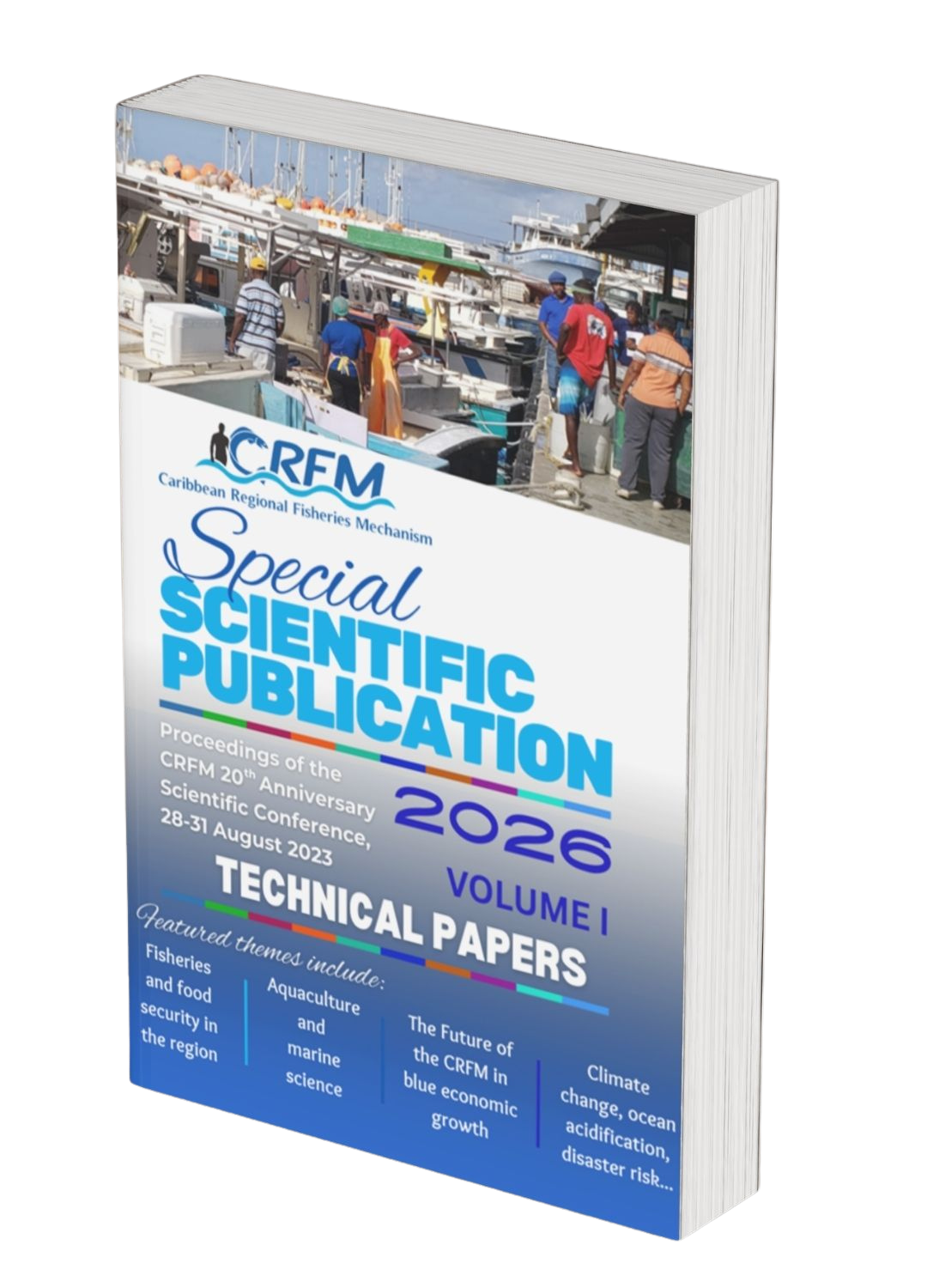
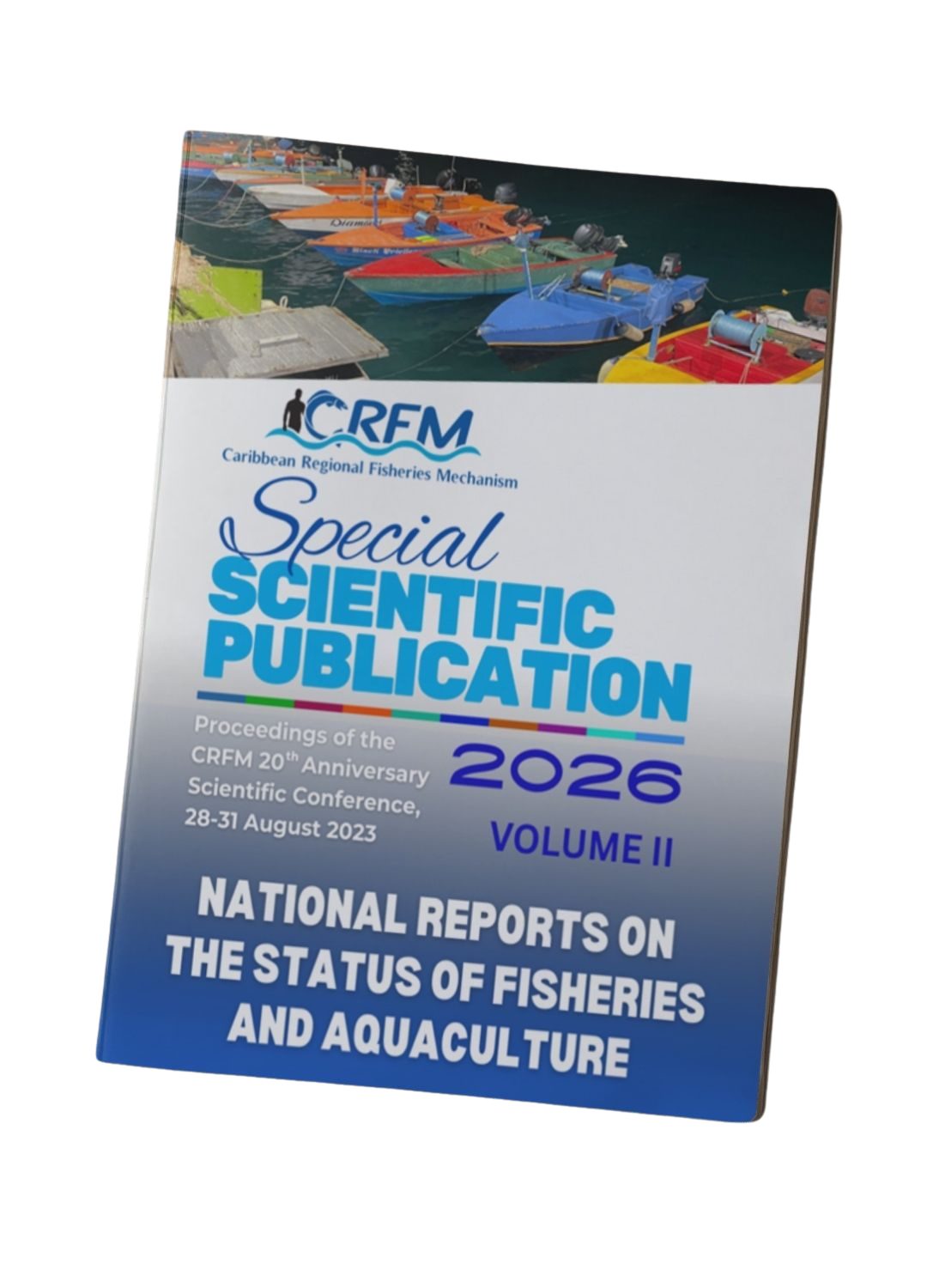
Download CRFM Special Publication No. 37:
Proceedings of the CRFM 20th Anniversary Scientific Conference
KEY LINKS
Scientific Conference Home Page
Scientific Conference Proceedings Page
Explore all 20th Anniversary Scientific Papers
NOTE
If you have challenges accessing or downloading documents in this series, please email us at This email address is being protected from spambots. You need JavaScript enabled to view it. , copied to This email address is being protected from spambots. You need JavaScript enabled to view it. , or call us at +501-223-4443. Some browsers do not properly load Google Drive documents, so if you have challenges accessing the PowerPoint slides or the full special publication, try switching to another browser such as Google Chrome or Microsoft Edge.